Regarding Influenza A/H1N1, known among the public as Swine Flu, hotels provide an atmosphere that facilitates its spread due to being venues where people from very different geographies, with very different lifestyles and habits, come together. In this framework, the national and sectoral importance of these meetings, which TÜROFED will conduct in cooperation with JohnsonDiversey, becomes even more significant.
Industry members showed intense interest in the briefing meeting organized by our association.
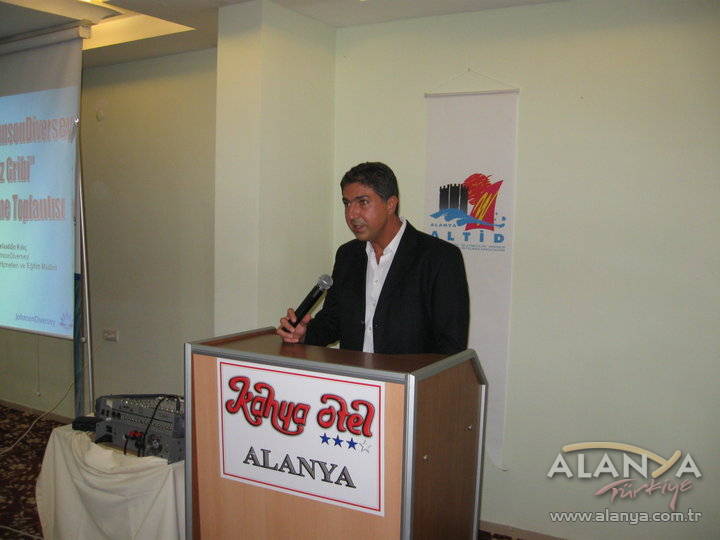
JohnsonDiversey Technical Customer Service Manager Velahaddin Kılıç provided information regarding general information about Influenza A/H1N1 (Swine Flu), what should be done to protect oneself, what course of action should be followed in cases, and what measures should be taken.
The Influenza A (H1N1) (Swine Flu) virus, which re-emerged in South and North America in April 2009, led the World Health Organization to issue a Phase 5 Pandemic Alert on April 30, 2009, indicating "infection at a community level and human-to-human transmission." Unlike avian influenza, the new influenza virus family can be transmitted from person to person. It has been reported that Influenza A (H1N1) (Swine Flu) viruses pass from person to person, but in the past, this transmission was limited and had not exceeded three people. Influenza A (H1N1) (Swine Flu) is a respiratory disease seen in pigs, caused by type A influenza viruses that occur continuously in swine.
It is believed that the virus causing the disaster in question is a mutated form of (H1N1). The new virus family is a hybrid version of swine, human, and avian influenza viruses; the US Centers for Disease Control and Prevention (CDC) states that it can pass from human to human, but there is not yet clarity regarding its severity. (28.04.2009).
The Accommodation Sector is under the threat of this new virus and must provide a safe environment for customers. Otherwise, there could be losses in business, brand value, labor productivity, and even loss of life. Cleaning and hygiene constitute the first steps of proper protection and the defense mechanism.
JohnsonDiversey products have been tested against enveloped viruses such as the Influenza A (H1N1) (Swine Flu) virus H1N1, and their efficacy has been proven.
Handwashing recommendations
· Increasing the frequency of hand washing is essential in preventing the disease from becoming contagious.
· Always wash your hands thoroughly after potentially coming into contact with contaminated surfaces, after removing gloves, after contact with secretions from the mouth, nose, or eyes (e.g., after sneezing or coughing), after using the toilet, and before engaging in any other activity.
· Use a gentle hand disinfection soap such as Soft Care Sensisept H34. Some people may have very sensitive skin and may wish to use additional products such as Dermasoft and Aquaguard to prevent skin irritation.
· Use Soft Care Alcoplus H500 for regular hand disinfection in situations where water or working conditions do not allow for more or more frequent hand washing.
General cleaning and hygiene recommendations
· Clean the facilities comprehensively on a daily basis. Clean areas with high foot traffic more frequently. Thoroughly clean and disinfect surfaces that are frequently touched by hand (countertops, cash registers, door knobs, counters, telephones, elevator panels, etc.).
· In Europe, products such as Suma Bac D10 are effective against viruses like Influenza A (H1N1) (Swine Flu). Provided they are rinsed with potable water, they can also be used on surfaces that come into contact with food (excluding kitchen utensils, glassware, and plates). Chlorine-based alternatives (such as Suma Tab D4) are used for disinfection on surfaces that have undergone pre-cleaning with a detergent.
· Clean tableware and kitchen utensils in an industrial dishwasher. Use regular dish detergents in the recommended dosages. Ensure that the final rinse temperature exceeds 80 degrees. The combination of heat and detergent will be sufficient for removing dirt.
· Care should also be taken to change tablecloths or wipe the table as customers change. It is best to follow the procedure you use for cleaning areas that come into contact with food.
· Shared washbasins and toilets must be thoroughly cleaned and disinfected at least once a day. Furthermore, special care should be taken regarding surfaces that are touched by hand, and the frequency of cleaning should be increased.
· There is no need to make changes to the floor protocol (cleaning with a wet mop using detergent solution or with a combined floor scrubber when soiled; carpets must be vacuumed regularly and shampooed when necessary).
· Use gloves used at home during cleaning and disinfection. Change gloves and wash hands before and after cleaning, as well as when moving between storage, preparation, and service areas.
· The double-bucket technique, frequent changing of the cleaning solution, spray-based applications, and the use of color-coded tools prevent the spread of microbes within the facility.
· Clothing, tablecloths, mats, towels, and other cleaning cloths must be washed daily. Use a single enclosed laundry bag for collection and transport. Laundry staff must use gloves while sorting the laundry.