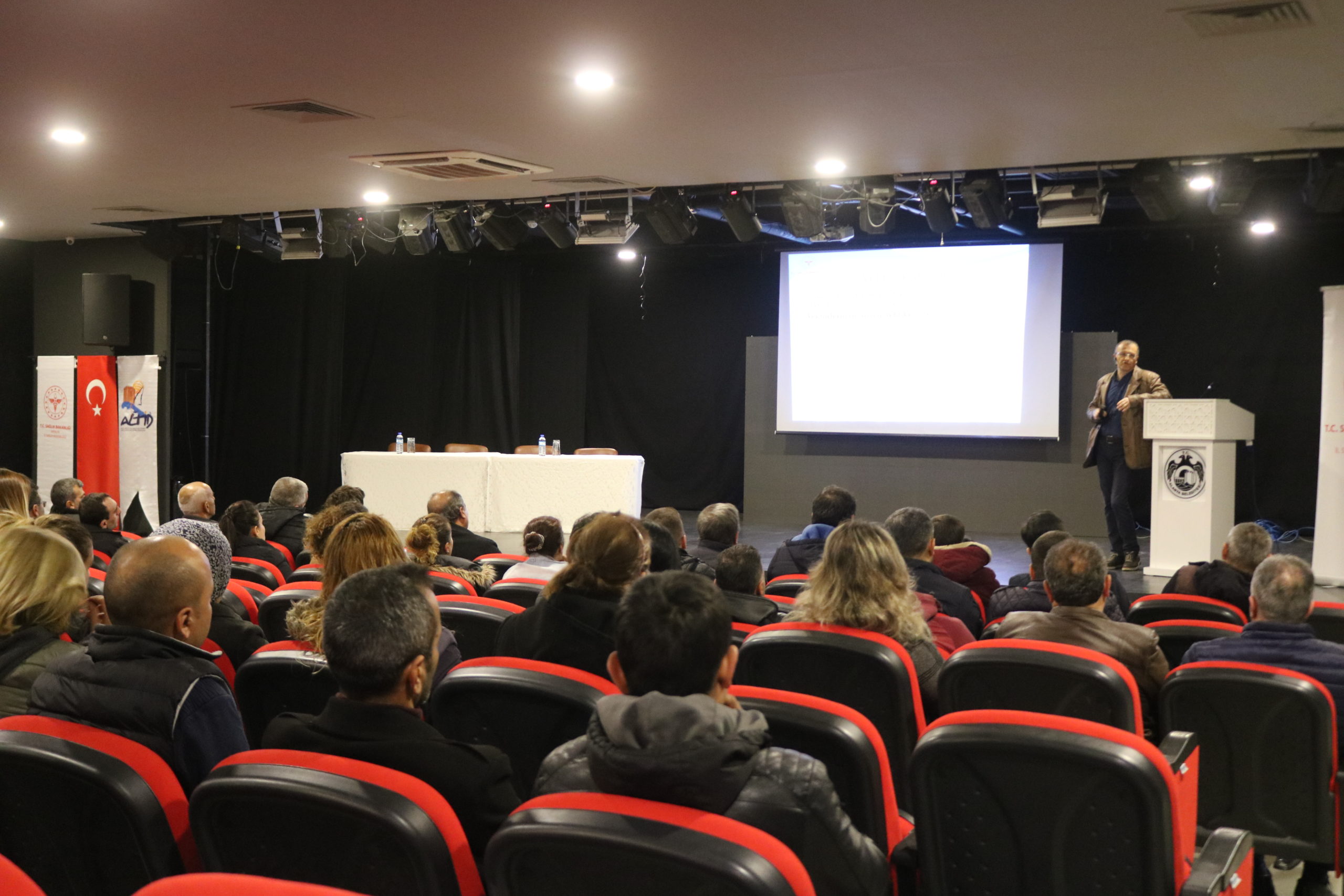
The Alanya Tourism Operators Association hosted a seminar on combating vectors such as mosquitoes, flies, cockroaches, silverfish, fleas, ticks, and rodents, organized by the Infectious Diseases Unit of the Antalya Provincial Health Directorate. The Infectious Diseases Unit of the Antalya Provincial Health Directorate provided a training seminar on "Vector Control" for technical personnel working in hotels in the tourism sector. During the seminar, hosted by the Alanya Tourism Operators Association (ALTİD), Veterinarian Ethem Örge explained the diseases caused by flies and rodents, the environments in which these organisms breed, and methods of prevention. "STANDING WATER PROVIDES A SUITABLE ENVIRONMENT," said Örge, explaining that 17% of all infectious diseases worldwide are caused by vector-borne diseases. He emphasized that vector organisms breed in warm climates, stagnant waters, and areas with accumulations, as well as in windless and secluded places. "Rivers, lakes, ponds, marshes, canals, wastewater treatment plants, buckets, containers, under flower pots, wheels, construction sites, septic tanks, swimming pools, elevator shafts, pumps, open and closed area grates, warehouses, wells, bathtubs, boats, barrels, fountains, fertilizer areas, ornamental ponds, and water tanks are suitable environments for their reproduction." "ELIMINATE THE PHYSICAL CONDITIONS RATHER THAN APPLYING PESTICIDES," he said. "The population of vectors such as mosquitoes, flies, cockroaches, silverfish, fleas, ticks, and rodents must be at a level that does not threaten human health. In the fight against these organisms, it is of great importance to eliminate the physical conditions that cause their formation as much as possible, rather than using pesticides. Unfortunately, vector control using pesticides, when the breeding is not prevented, causes damage to the environment and nature." YOU CAN DOWNLOAD THE PRESENTATION RELATED TO THE SEMINAR FROM THIS LINK.