TÜROFED LIVABLE ENVIRONMENT PROJECT
One of the most significant problems facing our tourism industry is the environmental disasters caused by environmental pollution and global warming, which our world is confronting.
Environmental issues and efforts aimed at protecting the environment are attracting more interest from our guests visiting our hotels every day and, at the same time, play a role in the selection of hotels, destinations, and tour operators.
As hoteliers, we invite you to work with and support TÜROFED and the project we have launched. By participating in and working together on this project as our hotels, you will not only contribute to ensuring a cleaner, more sustainable environment but also achieve economic gains along with increased customer satisfaction results. To give an example; if a 300-room, 4-star seasonal hotel meets only 7 of our environmental criteria, a seasonal financial saving of €20,000 is possible. It appears possible for you to increase this saving even further through the support and follow-up you provide to the project.
The fundamental objectives of our project are to reduce the damage to the environment and natural resources by decreasing the amount of water, electricity-energy, chemicals, and solid waste used in touristic enterprises, to ensure a cleaner and more livable environment, and to reduce expenses in touristic enterprises by increasing efficiency and achieving savings without sacrificing comfort.
TÜROFED Livable Environment Project
There are a total of 55 criteria in the Project, which are gathered under the headings of water, energy, chemicals, waste, other services, and environmental management. By the end of the second year, our touristic facilities participating in this project will also have met the minimum requirements for European Union ecological labeling criteria.
Participation in the project will be voluntary, and all kinds of information, documents, printed materials, and technical support required will be provided by TÜROFED. Our enterprises declaring that they meet the criteria will be announced on our public website and the websites of our associations, and information regarding the project and its participants will be transferred to international tour companies, agencies, non-governmental organizations, and public institutions and organizations.
Ensuring staff training and participation
It is certain that efforts aimed at environmental protection will attract more customers' attention; along with this, it is also important that employees are informed and trained about the project.
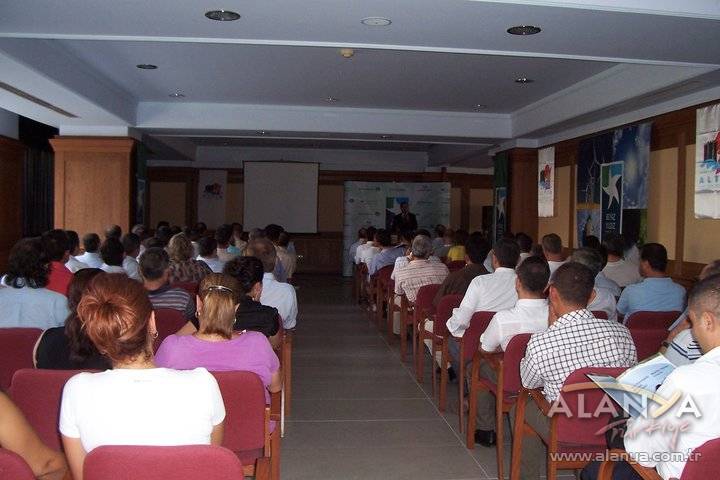
Within the scope of this project, we will organize environmental training sessions explaining the project for hotel management and employees in the AKDENİZ, EGE, İÇ ANADOLU, and MARMARA regions; furthermore, our aim is to contribute to the awareness of our employees and our society in general by preparing and distributing booklets, educational posters, and documents.
Step by step WHITE STAR
Just as all 55 criteria can be met at once, we can also meet the criteria within two years by contributing STEP BY STEP TO PROTECTING OUR ENVIRONMENT. We can reach our goal by following the criteria given below step by step and carefully. You can start implementing by beginning with simple criteria and those that do not require investment.
Project follow-up
TÜROFED will follow your work within the scope of the project, and should you need assistance, please apply to the TÜROFED Environmental Coordination Office.
CRITERIA for the TUROFED LIVABLE ENVIRONMENT PROJECT
STAGE
ENERGY
01
Turning off the heating or cooling system
If there is no system that automatically turns off the heating and/or cooling system when windows are opened, there must be information in a place easily visible to guests reminding them that they should turn off the heating and/or cooling system when the window(s) are open.
02
Turning off the lights
If there is no automatic light shut-off in the rooms, there should be information in a place easily visible to guests reminding them that they need to turn off the lights when leaving the room.
03
High-efficiency lamps
Ensure that 60% of all lamps are in energy class A within 1 year.
04
Automatic lights turning off in areas without continuous use, such as staff areas, general restrooms, storerooms, etc.
Ensure the installation of systems (motion-sensitive, etc.) that will enable lamps to turn off automatically in general usage areas.
WATER
05
Water flow rate from faucets and showers
Ensuring that the flow rate of water flowing from faucets and showers is a maximum of 12 lt/min or lower.
06
Water conservation in bathrooms and toilets
In bathrooms and toilets, there should be instructional information to guide them in helping the business save water.
07
Trash cans in toilets
Appropriate waste bins must be available in every toilet, and guests should be directed to use these waste bins instead of using the toilets.
08
Leaks
Employees should be trained to conduct daily inspections regarding water leaks and to carry out the necessary repairs. Guests must be guided to report any leaks they witness to the staff.
09
Changing of towels and bed sheets
Guests must be informed regarding the establishment's environmental policy, being notified that their towels and bed linens will be changed whenever they request it, and that in the absence of a request, they will be changed once a week in low-class accommodation facilities and twice a week in high-class accommodation facilities.
10
Garden and plant irrigation
Plant and garden watering should be done in the morning or evening when the sun is not at its peak. Preferably after 00:00 at night
11
Wastewater treatment
All wastewater must be treated.
DETERGENTS and DISINFECTANTS
12
Staff training on the use of disinfectant and detergent
- Providing personnel with training regarding the use of detergents and disinfectants,
WASTE
13
Waste separation by guests
Sorting stations must be provided where guests can separate their solid waste according to local or national systems. Information notices must be available in the rooms for guests to separate their solid waste.
14
Hazardous waste
Batteries, battery packs, and mineral oils must be collected separately.
15
Waste sorting
Personnel must ensure that waste is sorted according to its categories in accordance with the local or national waste collection system. At least 2 groups, namely ORGANIC and INORGANIC.
16
Breakfast packages
Unless required by law, small-packaged (single-dose) breakfast items should not be used.
17
Waste oil disposal
A grease trap must be installed, and waste oils must be collected and disposed of appropriately.
OTHER SERVICES
18
Non-smoking areas in public spaces
There must be a non-smoking section in public areas.
19
Public transportation
Information regarding public transportation vehicles must be available for guests and employees.
MANAGEMENT
20
Maintenance and service
Service and maintenance of all equipment used in the enterprise must be carried out as determined in laws and regulations.
21
Maintenance and service of boilers
Maintenance and servicing of boilers must be performed at least once a year.
Efficiency controls and emission controls of boilers must be performed at least once a year.
22
Staff training
It must be ensured that personnel receive training at least once a year, and that new personnel receive training within 4 weeks from their start date.
23
Informing guests
Information regarding the work performed and policies in the reception and rooms must be provided.
24
Recording of energy and water expenditures
The enterprise must have the necessary procedure to record and monitor the overall energy consumption (kWh), electricity consumption (kWh), energy used for heating (kWh), and water consumption (liters).
25
Environmental survey
Businesses should conduct surveys to obtain the views of their guests regarding environmental efforts.
CRITERIA FOR THE TUROFED LIVABLE ENVIRONMENT PROJECT
2ND STAGE
(In addition to the 1st Stage criteria)
ENERGY
01
Energy from renewable sources.
At least 22% of electricity must come from renewable energy sources. This criterion applies to accommodation businesses that can access the market for energy obtained from renewable sources. A renewable energy source includes energies obtained from non-fossil fuel sources; wind, solar, geothermal, wave energy, hydropower, biomass, landfill gas, wastewater treatment plant gas, and biogas.
02
Coal and heavy petroleum products
Heavy oils or petroleum products with a sulfur content greater than 0.2% must not be used as an energy source. This criterion applies to accommodation enterprises with independent heating systems.
03
Electricity for heating
At least 22% of the electricity used for heating rooms and obtaining hot water must come from renewable energy sources. This criterion applies to accommodation businesses that have independent electric heating systems and can access the energy market sourced from renewable energy resources.
04
Boiler (heat source) efficiency
The efficiency of the new boiler must be at least 90%. In Decree No. 92/42/EEC, useful efficiency (as a percentage) is defined as the ratio of the heat transferred to the boiler water to the net calorific value produced at a constant fuel pressure.
05
Air conditioning
Newly purchased air conditioning equipment must have at least Class B energy efficiency. This criterion does not apply to equipment using another energy source, having a cooling capacity greater than 12 kW, or to air-to-water and water-to-water heat exchangers.
06
Window insulation
All windows in the rooms must have appropriate high-degree thermal insulation according to the local climate and must provide an appropriate degree of sound insulation. It is preferred to be double-glazed
07
High-efficiency lamps
Within 1 year, it must be ensured that 80% of all lamps that burn for more than 5 hours a day have Class A energy efficiency. Lamps that cannot be replaced with high-efficiency lamps due to their physical characteristics are out of scope.
08
Sauna time control
Time control must be present in all saunas. (This criterion applies to those using electricity for heating)
09
Air conditioning systems
Newly to be purchased air conditioning systems must be at least Class B, and ideally Class A, in energy efficiency.
10
Refrigerator positioning
(Kitchen refrigerators should be positioned according to the principle of energy conservation.)
- Refrigerators must be kept away from or protected from heat sources (e.g., ovens).
- The cooling coils of the refrigerators must be cleaned thoroughly and regularly.
- Procedures must be in place to ensure that refrigerator doors are opened as infrequently as possible.
11
Automatic light switching off in guest rooms
In 80% of all guest rooms, it must be ensured that the lights turn off automatically after the guest leaves the room.
12
Automatic lamp shutdown in outdoor areas
Outdoor lamps that are burning unnecessarily should be automatically turned off.
WATER
13
Water source
If studies reveal that the use of the current water source causes intense environmental impacts, the business must notify the local water authority of its willingness to change the water source (such as tap water, surface water, etc.).
14
Urinal water
Urinals must be equipped with an automatic system that prevents manual flushing or the simultaneous flushing of five units.
15
Wastewater plan
The accommodation facility will inquire about the wastewater plan from the local government and, if one exists, will comply with the plan.
16
The flow rate of water flowing from faucets and showers
The average flow rate of water from all faucets and showerheads (excluding bath mixers) must not exceed 8.5 liters/minute.
HAZARDOUS CHEMICALS
17
Swimming pool dosing system
The swimming pool dosing system must be automatic.
18
Mechanical cleaning
Within the business, cleaning procedures that do not involve the use of chemicals must be in place (such as the use of microfiber products or non-chemical products)
DETERGENTS and DISINFECTANTS
19
Disinfectants
Disinfectants should only be used to fulfill legal hygiene requirements.
WASTE
20
Transportation of waste
If local waste management authorities are not collecting solid waste, the business must demonstrate that it transports its waste to an appropriate disposal site as soon as possible.
21
Single-use products
Unless required by law, the following products must not be used in rooms and restaurants:
Single-use or small-packaged amenity kits (shampoo, soap, shower cap, etc.)
Plates, cutlery, and glasses.
22
Disposable beverage containers
Unless otherwise stated by law, single-use beverage containers shall not be used within the establishment or in areas under the responsibility of the establishment.
OTHER SERVICES
23
Used textiles and furniture
Used textile products, furniture, and other materials should be sold, donated to charitable organizations, or given to organizations that collect and redistribute these materials.
24
Environmental communication and education
- The business must distribute brochures or other educational materials to guests and visitors regarding the destination or the business surroundings.
- These brochures or educational materials must include information on how to be environmentally sensitive and responsible.
- Where appropriate, these brochures or educational materials should contain specific information for young guests.
25
Local food products
At least 2 locally produced food items, including breakfast, must be served in meals.
MANAGEMENT
26
Policy and action plan
There must be an environmental policy and a corresponding action plan.
27
Collection of other information
The business must have the necessary procedure to record and monitor the volume of chemicals used (dry matter weight) and the volume of waste produced (unseparated waste in liters and/or kg).
28
ISO certificate of suppliers
At least 1 main goods or service provider of the tourist enterprise must hold ISO 14001 certification.
29
Energy and water measuring devices
- The business must install extra energy and water measuring devices to measure the expenditures of different activities and equipment. These activities or equipment;
* Laundry, kitchen, a floor of the business, etc.
* Refrigerators, washing machines, chiller groups, etc.
* Other
- A detailed explanation of how this criterion is met, including measurement data if available.
30
Additional environmental actions
The tourist enterprise must carry out studies aimed at increasing the enterprise's environmental protection performance, apart from the points mentioned above.
- Identify studies that will reduce energy and water consumption, chemical use, and waste production
MORE THAT CAN BE DONE
ENERGY
01
Production of electricity with solar cells and wind
The business meets 20% of its annual energy consumption from solar cells or wind energy.
02
Heating from renewable energy sources
At least 50% of the energy used for rooms or hot water in the establishment must be provided from a renewable energy source.
03
Boiler efficiency
The presence of a 4-star boiler in the facility, as specified in paragraph 6 of Decree 92/42/EC.
04
Boiler NOx emissions
According to the standard regulating the boiler's NOx emissions, it must be Class 5 and produce less than 70 mg NOx/kWh emissions.
05
District heating
The heating of the enterprise must be met by district heating.
06
Combined heat and power
All heating and electricity generation of the facility must be provided by a combined heat and power unit.
07
Heat pump
A tourist enterprise must have a heat pump for heating and/or cooling.
08
Heat recovery
The tourist enterprise must have a heat recovery system in 1 or 2 of the following points. These are; the cooling system, fans, dishwashers, washing machines, swimming pools, domestic wastewater.
09
Heat regulation-adjustment
The temperature of each room must be able to be adjusted independently.
10
Thermal insulation of the existing building
To reduce energy consumption, the building's insulation must be above the minimum national standard.
11
Automatic shutdown of the air conditioner
Air conditioners in the rooms must automatically turn off when windows are opened.
12
Bioclimatic architecture
A tourist enterprise must be constructed according to bioclimatic architectural principles.
13
Energy-efficient refrigerator, dishwasher, washing machine and office appliances
All household refrigerators must be in energy class A and efficiency, and mini bars must be at least class C.
All household dishwashers must be in energy class A and efficiency.
All household washing machines must be in energy class A and efficiency.
At least 80% of office equipment (computers, faxes, printer-scanners, photocopiers) must meet the energy star requirements specified in Regulation No. 2422/2001.
WATER
14
The use of rainwater and reclaimed water
Rainwater should be collected and used for purposes other than cleaning and drinking.
Treated and purified sink water should be used for purposes other than cleaning and drinking.
15
Toilet flush mechanisms
At least 80% of all flush toilets must consume 6 liters or less of water per use.
16
Dishwasher water consumption
Dishwasher water consumption (W) must be less than or equal to the threshold value in the calculation specified below.
W(measured) ≤ (0.625xS)+9.25
W(measured)= water consumption found by measurement for each wash (lt/wash)
S = number of place settings
Example: A dishwasher with 12 place settings must consume a maximum of 16.75 lt of water per wash, while one with 6 place settings must consume a maximum of 13 lt of water per wash.
17
Washing machine water consumption
Washing machines used in the establishment or located in the laundry service (company) used by the establishment must consume 12 liters or less of water per wash (according to the 60 °C and cotton program specified in the EN 60456:1996 standard, which is referred to in Directive 95/12/EC).
18
Tap water temperature and flow rate
At least 80% of all faucets must ensure that the water temperature and flow rate can be finely adjusted.
19
Shower stops
There must be an automatic shut-off system for showers in the kitchen and outdoor areas when they are not in use or after a certain period of time.
HAZARDOUS CHEMICALS
20
Detergents
80% of all cleaning, dishwashing (manual and machine washing), laundry detergents, and general cleaning detergents used within the facility must be ecologically labeled or possess Type 1 ecological labeling according to other national or international ISO systems.
21
Paints, varnishes, and polishes used indoors
50% of the interior paints and varnishes used within the facility must be ecologically labeled or must have Type 1 ecological labeling according to another national or international ISO system.
22
Organic garden
Maintenance of green spaces should be carried out either without the use of pesticides or according to organic farming principles.
WASTE
23
Composting
The business must ensure that it collects its suitable organic waste separately and composts it in accordance with local authority regulations.
OTHER SERVICES
24
Non-smoking
Smoking should not be permitted in at least 50% of the rooms.
25
Bicycles
There should be bicycles for the use of guests.
26
Reusable bottles
Tourist enterprises must offer at least one of non-alcoholic beverages, water, and beer in refillable bottles.
27
Paper products
At least 50% of the toilet paper and/or office paper used within the facility must be ecologically labeled or must have Type 1 ecological labeling according to other national or international ISO systems.
28
Durable products
At least 10% of durable goods used within the facility in any category (for example, sheets, towels, tablecloths, computers, televisions, beds, furniture, dishwashers and washing machines, refrigerators, vacuum cleaners, floor coverings, light bulbs...) must be ecologically labeled or possess Type 1 ecological labeling according to other national or international ISO systems.
29
Organic food
The main ingredients of at least 2 types of dishes must be produced using organic farming methods.
MANAGEMENT
30
The enterprise's EMAS or ISO certificate
The tourist enterprise must be registered with EMAS or hold ISO 14001 certification.