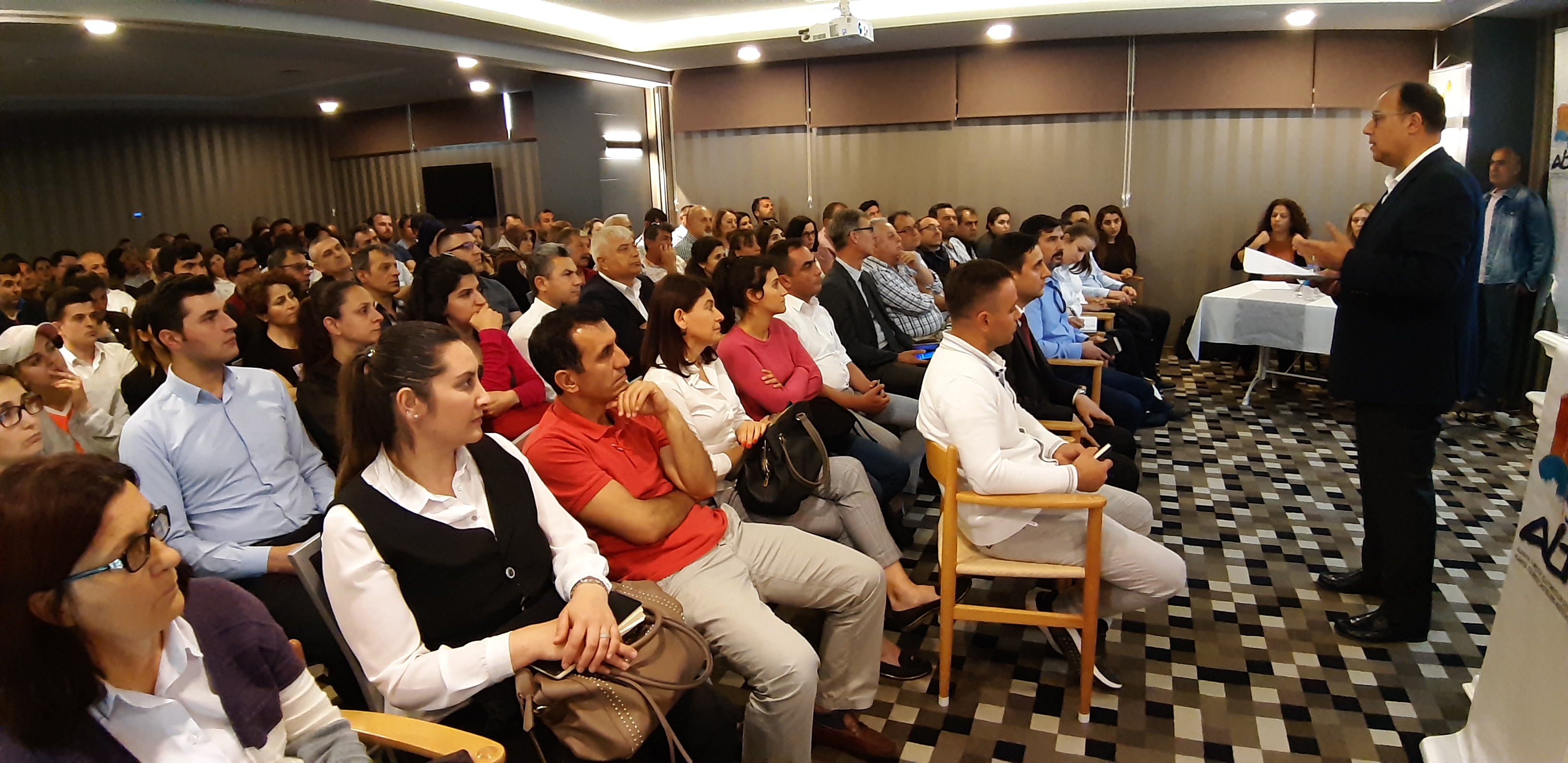
The Alanya Association of Tourism Operators (ALTİD) and the Antalya Provincial Directorate of Public Health, Early Warning Service Unit, jointly organized an informational seminar on the Coxsackie virus (hand, foot, and mouth disease) at the Sunprime C-Lounge Hotel. In addition to hotel staff, the seminar was attended by participants from various other sectors. WHAT IS THE COXSACKIE VIRUS? Symptoms and findings: Hand, foot, and mouth disease is a highly contagious viral illness primarily affecting children under 5 years of age. It can also occur in older children and adults, although less frequently. It is characterized by a clinical picture including fever, sore throat, loss of appetite, and weakness, along with rashes on the mouth and around the mouth, and on the palms of the hands and soles of the feet. The rashes can appear as red, round lesions, or sometimes as vesicles filled with fluid. Hand, foot, and mouth disease is usually a self-limiting viral illness that does not cause severe complications. Patients typically recover completely within 7 to 10 days as all symptoms subside. In rare cases, it can lead to viral or aseptic meningitis. Causes and diagnosis of the disease: Hand, foot, and mouth disease typically occurs, especially during the spring and early autumn. The diagnosis is usually made clinically based on the patient's age, clinical findings, characteristics of the rash, and the distribution of the rash. However, in cases where the number of cases is higher than expected, or if complications such as aseptic meningitis, which is rarely seen, are suspected, laboratory diagnosis can be made by examining nasopharyngeal swabs, fluid from the rash, and stool samples, as is the case worldwide. Disease transmission and prevention: The virus is found in the nasopharyngeal secretions of infected individuals, in the fluid within vesicular rashes, and in stool. It is a highly contagious disease that spreads through respiratory droplets, the fecal-oral route, and contact from infected individuals to susceptible individuals. The rate of transmission is usually highest during the first week of the illness. It is recommended that infected individuals stay at home during the symptomatic period to prevent the spread of the virus and avoid contact with susceptible individuals. Susceptible individuals should wash their hands frequently with soap and water, disinfect frequently touched surfaces, disinfect objects and toys that have come into contact with the virus, avoid sharing utensils and close contact (hugging, shaking hands), and take other preventive measures. Treatment of the disease: There is no vaccine with proven efficacy and safety for the prevention of hand, foot, and mouth disease, and there is no specific medication for its treatment. The disease usually runs with mild symptoms and resolves on its own. However, pain relievers and antipyretics may be used to relieve symptoms, and gargles and sprays may be used to reduce sore throat. Children who are unable to receive adequate fluids and nutrition should receive the necessary fluids and nutritional support. Current situation in the world and in our country: The disease is endemic (incidence rate > 10 per 10,000 people) in East Asian countries such as China, Japan, Malaysia, and Taiwan. These countries have a mandatory case reporting procedure established by the World Health Organization. As in other European countries, the disease occurs in our country, especially during the spring and early autumn, and the incidence rate is less than 1 per 10,000. Our country is not among the countries where the disease is endemic, and active case reporting is not carried out. However, compared to previous years, an increase in cases has been observed in some regions during this seasonal transition period. In Antalya province, where an increase in cases has been reported, the Ministry of Health has been monitoring disease reporting since July 1, 2017, and has determined that the incidence rate is less than 1 per 10,000, as expected during this seasonal period. Clinical samples from 25 cases selected from Antalya province were evaluated for molecular identification, and the presence of the virus was detected in 18 patients using molecular methods. Using advanced cell culture and subtype identification, the subtypes of Coxsackievirus A6 were detected in 16 patients, and Echovirus 25 subtypes were detected in 2 patients. Source: T.C. Ministry of Health, Public Health General Directorate https://hsgm.saglik.gov.tr/tr/haberler/104-el-ayak-ve-agiz-hastaligi.html